
Spinning top-like seats greet you as you wait in line to enter the colossal Zeitz Museum of Contemporary Art Africa (Zeitz MOCAA) as it opened its doors to the public this weekend. One patron noted that the spinning seats shake your mind up to new ideas. Perhaps she’s right. These novel ‘chairs’ are just a taste of the kind of interactive and new take on norms that pervade our experience of the world. And that is just what the Zeitz MOCAA, situated in Silo District of the V&A Waterfront, achieves with the various exhibits on display.
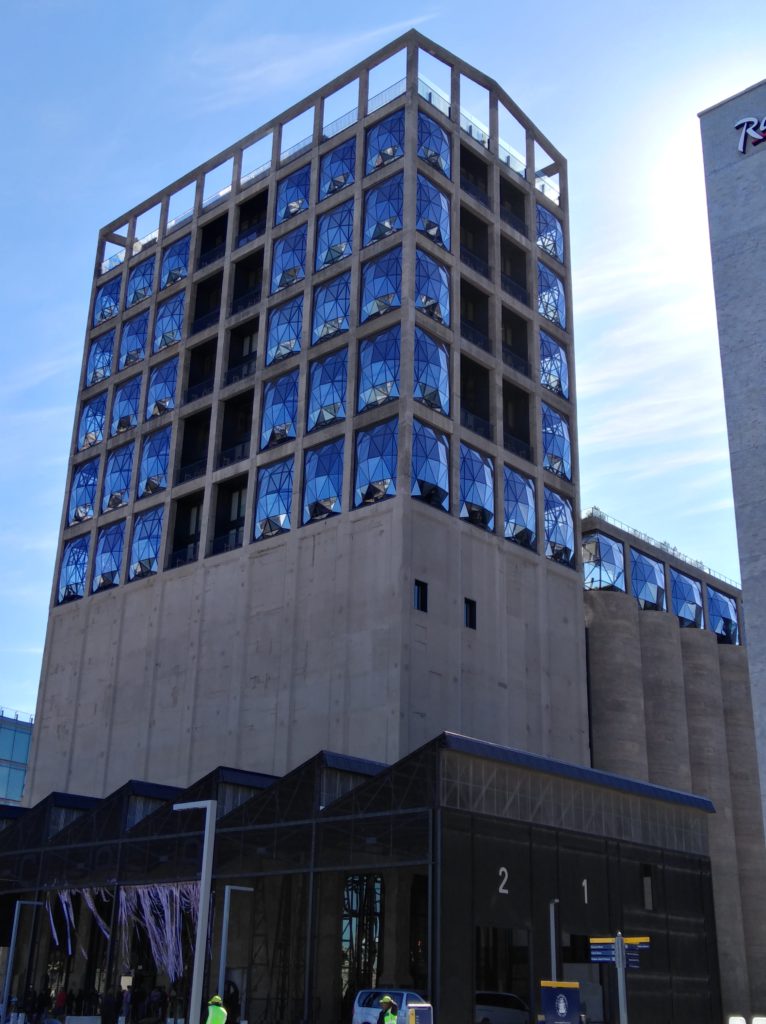
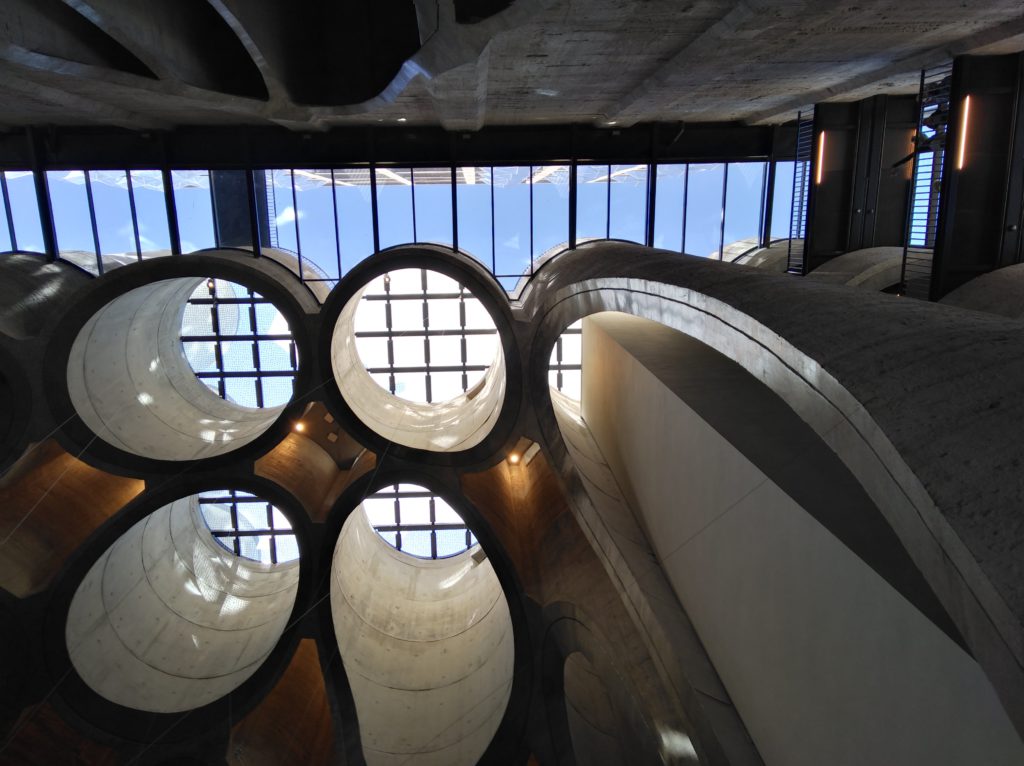
Even the use of the old foreshore grain silos as a place to exhibit art, adds to this meeting and collaboration between contrasting worlds. Being inside this structure makes you feel as if you’re part of a hive – the silo divisions are cut away to form dissected cylinders that tower over the main floor.
While the architecture draws you in, it’s the art on display that captivates. Visitors are greeted by a massive bird constructed using rubber inner tubing, multi-coloured ribbons, an animal skull, and pink theatre lights. This bird, with its outstretched wings, hovers over the BMW Atrium, and is the work of Nicholas Hlobo. Inspired by the Xhosa myth of the Lightning Bird, the ‘iimpundulu zonke ziyandilandela’ celebrates and preserves an aspect of the rich African oral history.
Zeitz MOCAA Executive Director and Chief Curator, Mark Coetzee, notes that the museum is a celebration of the 54 African states. He says that it also provides African artists the platform from which to tell their own stories. And this is prevalent throughout the museum; each exhibit celebrates some form of being African, and questions the influences of its colonial past, and the violence of the occupation of African land and bodies.
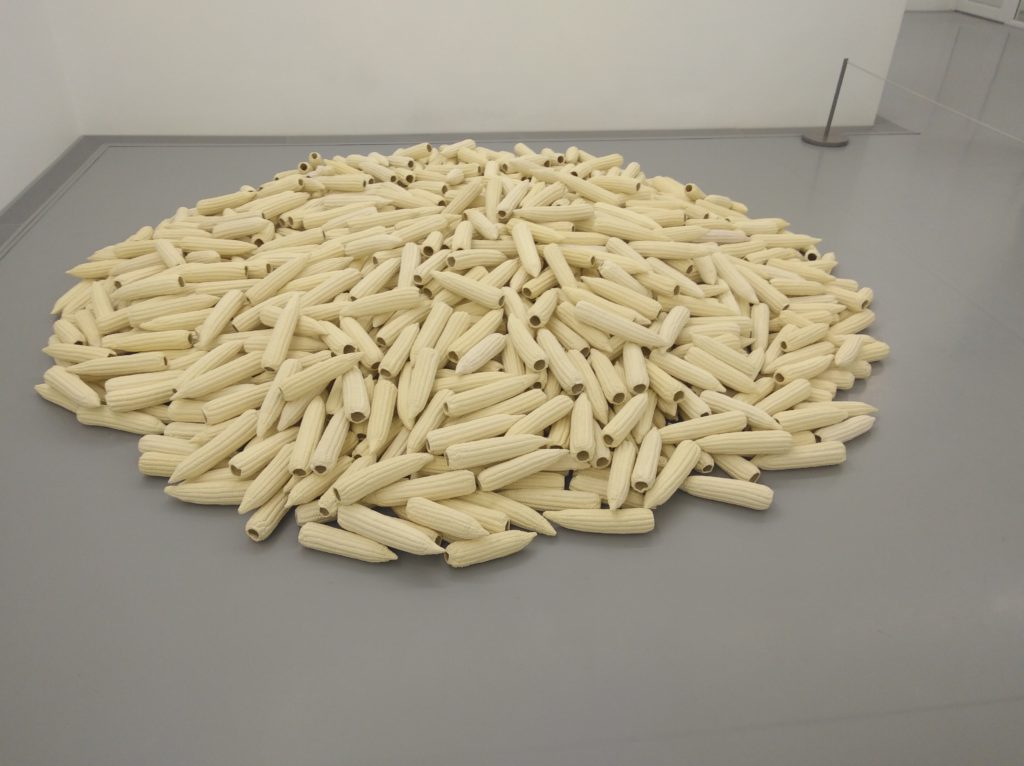
And this question is taken further by Michele Mathison’s contribution, the Harvest. Some 1 200 hollowed out ceramic mielies are heaped on the floor of Level Four. In turn, they’re surrounded by burnt tree stumps. To my unskilled eye, the ceramic mielies with no core symbolized the lack of sustenance and value in African crops, which have now been tainted by patented seeds, unable to yield more than one crop. But as the museum guide explains:
What purpose do 1 200 ceramic mielies serve if unable to provide actual nourishment? Why do we violate the very thing we depend on for survival?
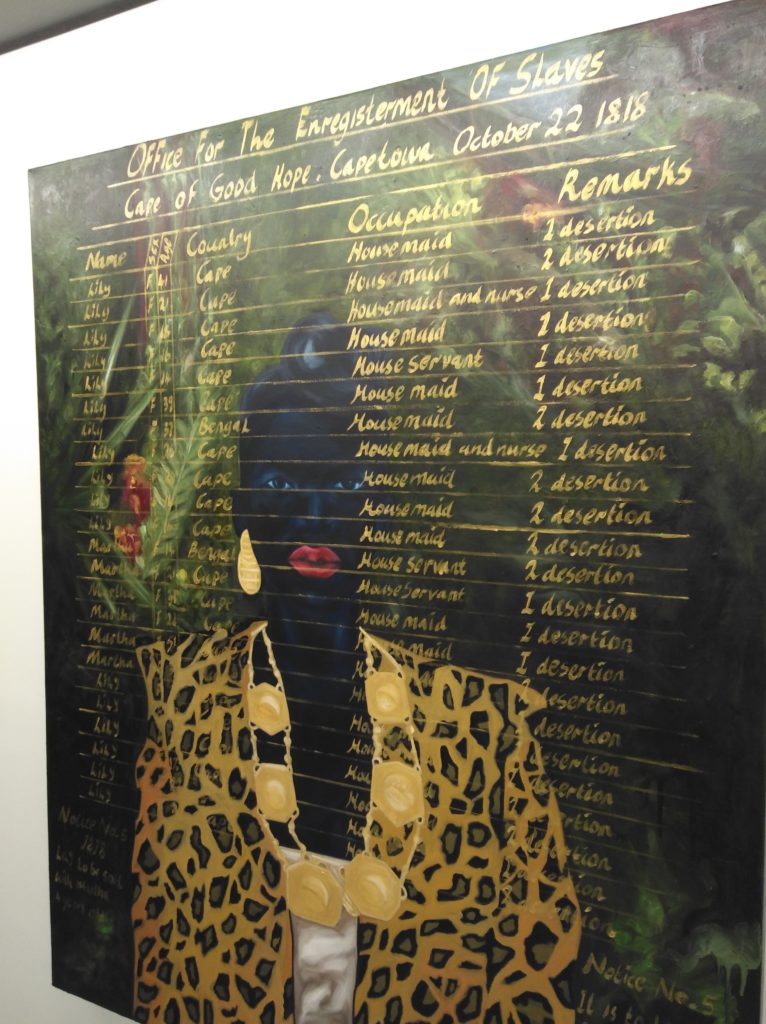
There are many exhibits that shock, and force you to rethink the African experience outside of Cape Town. Even Capetonians have trouble recognizing the stark differences and inequalities that exist in this city. Perhaps the Zeitz MOCAA, which is owned by a German, curated by a South African, and designed by an Englishman, will provide a space where we can draw further connections between the past and present, and address the inequalities that saturate being a post-colonial African.
And with free entry for African citizens on Wednesdays, and under 18s every day, let’s hope that the public makes use of the repurposed structure as a space for learning and collaboration.
*The Zeitz Museum of Contemporary Art Africa is open daily from 10am – 6pm.