The Fitness Mind(set)

Gyms are once again operating in South Africa. The timing of this announcement would have any conspiracy theorist setting up a new plotting board (creepy red string included). Gym owners and fitness enthusiasts held socially distanced protests saying that they are probably the best equipped to take on covid-19.

Their reasoning?

Well, physical fitness is a key factor to fighting the disease, their machines are well-spaced, and hygiene is tantamount to any fitness establishment.

Flash forward to the regulations being lifted, and South Africa’s finest returned to their place of worship – the gym. But where were the strict hygiene protocols? Who was sanitizing the equipment, and who was ensuring that patrons were wearing their masks?
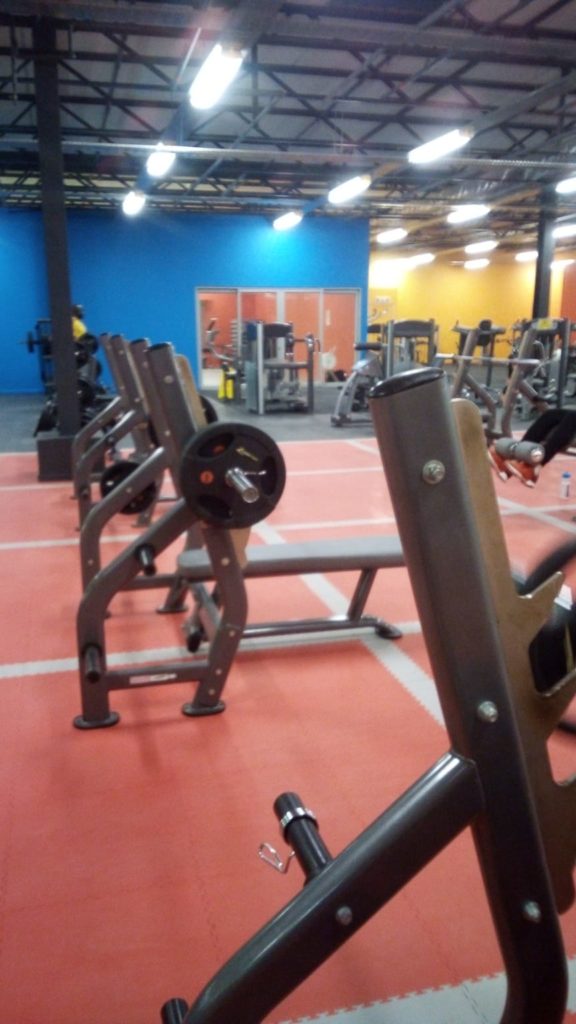
They’re open

All good questions.

At one establishment, it seems that gym users were left to determine the degree to which they adhered to the lockdown regulations and hygiene protocols.  

But this hasn’t bothered them. Their favourite place to sculpt their bodies is once again open and functioning.

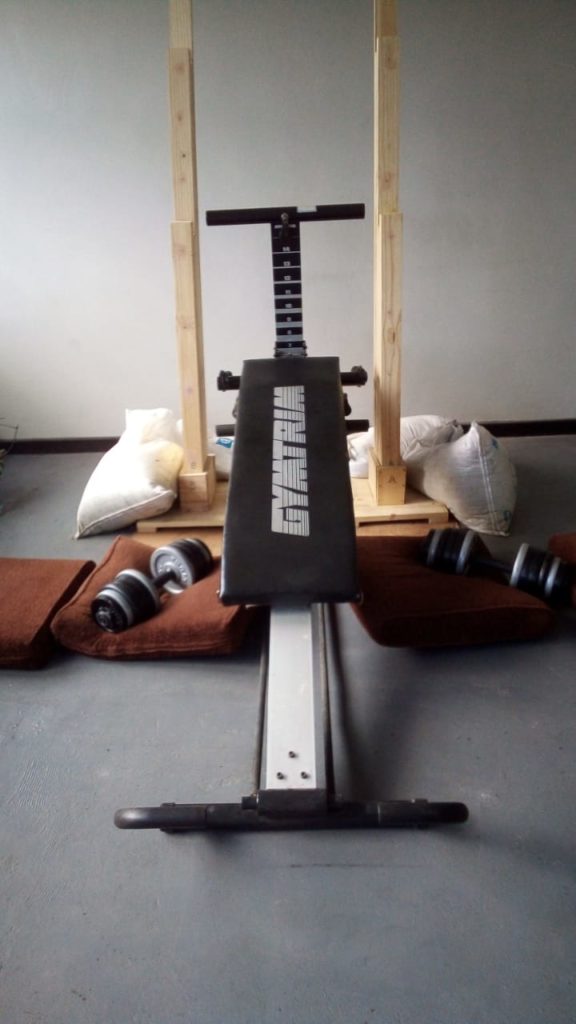
And this dedication to the art of fitness /body-building has grown during the lockdown. Some even pooled their resources, and set up ‘home-gyms’.

These were quite creative:
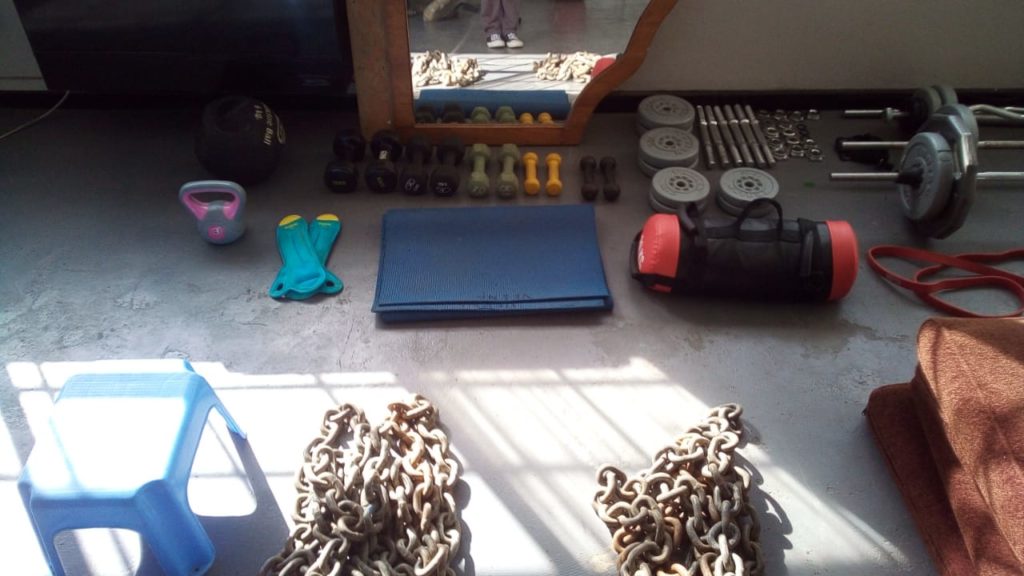
I am told that they have their pros and cons. But working out at the gym reigns supreme.

I spoke to a *Sly who derives joy from these tests of strength. And for him, this relationship with the gym began at the age of 13. This journey began while going to gym with his mother; he wasn’t allowed to use the weights, but used to marvel at the “bigger guys”, and try to copy them. This later evolved to a more serious dedication three years later.
There are different types of people in the weights section of the gym; and one, which I found to be the stereotype of buff guys, is to “bro” it out. This means only training arms and increasing the weights, which disregards style and technique.

Sly later realized that “Bro-ing” at gym was not ideal, and his time was better spent applying technique to get the maximum results. His training as a physiotherapist helps.

Technique plays an important role, but diet and lifestyle have their influences as well. What’s the point in bulking up if you can’t see the definition? This therefore requires two phases; the bulk and the cut. Bulking means eating more high protein and carbohydrate meals, and being at gym will require pushing heavy weights. For the cut, the diet sees a calorie drop, where Sly burns more than he consumes. So he’ll eat less and increase his cardio at the gym. The weights will be slightly lighter, but the repetitions (reps) will increase.

But who wants to lift heavy things all the time? And what is the point? Sly says it’s about disciplining your body and sculpting it to its most ideal form.  Another motivator is not becoming overweight, and being unable to breathe or move freely. Body-image is important, and the compliments make it all worthwhile.

While there are many products and workout regimes, it’s important to decide what works best for you and your needs. Therefore consult an expert, and don’t follow those workout plans you find on Pinterest. Sly advises to fully research diets and not restrict yourself to the point that it affects your social life. Your gym buddies should have a similar approach, while also motivating you to do more and better.
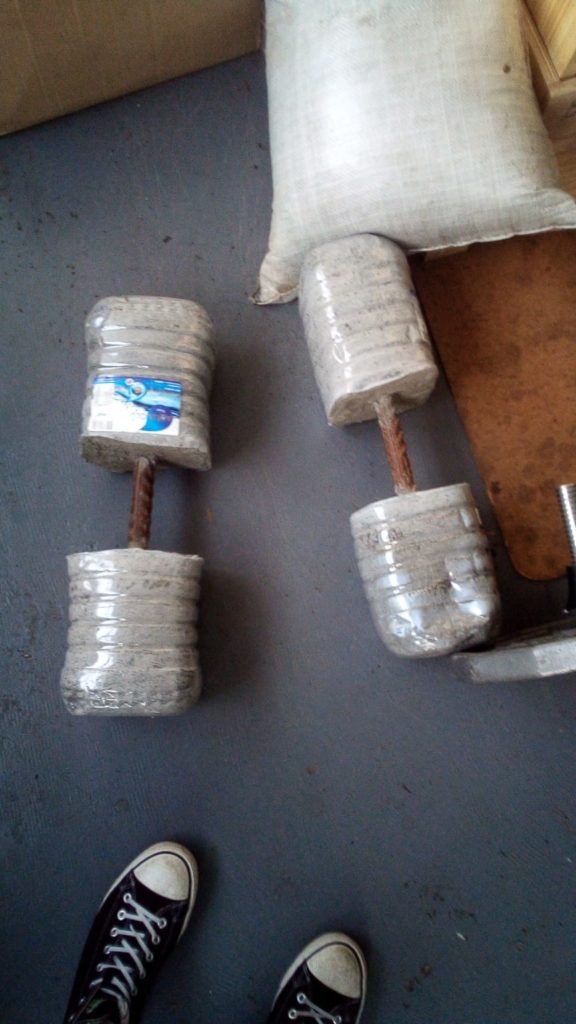
Sand-filled water bottles used as weights

Fitness and physical health are lifestyle choices, and cannot be achieved in a few months. Here’s some tips from the pro:

  1. Admit that you need to change, and ask why it’s necessary
  2. Decide on goals, even write these down
  3. Take “before” pics in your underwear (don’t flex, or suck in your tummy. Make it as unflattering as possible). It will help in a months’ time when you’re thinking of quitting
  4. Realize that patience is key, your change won’t happen overnight but with dedication it will
  5. Change your relationship with food. Don’t “diet” but adapt your eating preferences. This doesn’t have to be scary. If you normally have three outings to the drive through a week, cut it down to one. You’ll definitely see a difference.
  6. Sly says to do a holistic program, which will include compound movements and full body exercises. Basically avoid only doing isolation exercises. Fit cardio into your program.

*name has been changed
There’s truth; and then there’s the facts

“Wilde Als (wormwood) puts oxygen in your body.” My mother said this with so much authority, that you could swear she had several medical degrees. Turns out she got this information from her friend who did a Google search on the benefits of the Artemisia plant.

Some of my childhood ailments were treated with the “Als” plant. We had one growing in our yard. It had a strange smell, and my mother would brew it when I had a bit of a sniffle. She would also warm whole spices in a pan and put them in a towel and place it on my tummy ache. These home remedies worked, but ask any of those sage proponents why they worked, and you’d be hard pressed to get a conclusive answer.

And that’s the concern now as so many people are sprouting “home remedies” as cures for a virus that has proven a test of medical and political will. Madagascar has bottled the extract of the Artemisia plant as the cure for covid-19, but there’s no conclusive answer on how it helps with various ailments.

This virus is new. There are many theories, even doctors are learning about it daily. The right and wrong ways to treat these symptoms are being formulated as covid-19 takes hold in the world’s population.

The dreaded “Rona”, much like the malaria parasite, directly infects the red blood cells. It targets the haemoglobin, which is responsible for transporting oxygen and carbon dioxide in the blood. If my mother’s friend had Googled a bit further, she would have found that extracts of this “miracle” plant are present in antimalarial medication. These molecules appear to work in diverse ways for protecting haemoglobin against infection, hence their possible successful use against covid-19.

But the World Health Organisation is vilified for clarifying that it will only endorse Madagascar’s “covid cure” once clinical trials prove that it is a successful means to treat the novel coronavirus. Why not get the science of how this potential cure works first, before telling everyone to use it?

Aspirin alleviates headaches, but people on blood-thinning medication cannot use it. That’s because we know that a combination of the two could be detrimental. (The combined use of warfarin plus aspirin substantially increases the risk of major bleeding side effects).

So why are people more willing to take the advice of some lay person, rather than medical practitioners and scientists who literally understand how the virus works?
And when media provide the public access to these scientists, to educate them about the dreaded covid-19, they are dismissed for spewing “mainstream” propaganda.

via GIPHY

George Orwell wrote, “The best books… are those that tell you what you know already.”

I suppose this is reinforced in the 21st century, as we are exposed to social media platforms that draw on our search preferences and feed those back to us. So you’re constantly exposed to something that you “know already”, reinforcing that narrative, but to the point of disregarding new information.

via GIPHY

And the ability to interrogate that new information is also limited, because our brains are not used to that kind of thinking any more. And the possibility of a rational disagreement is also rare.

But in this time of corona, and the availability of varying theories and facts about the virus, truth is subjective. My truth of covid-19 is different to my mother’s friend, who chooses “alternative” sources of information. Is it verified, tried and tested?

Who cares? It’s the truth, and then there are the facts.

via GIPHY

I Bought a Fish

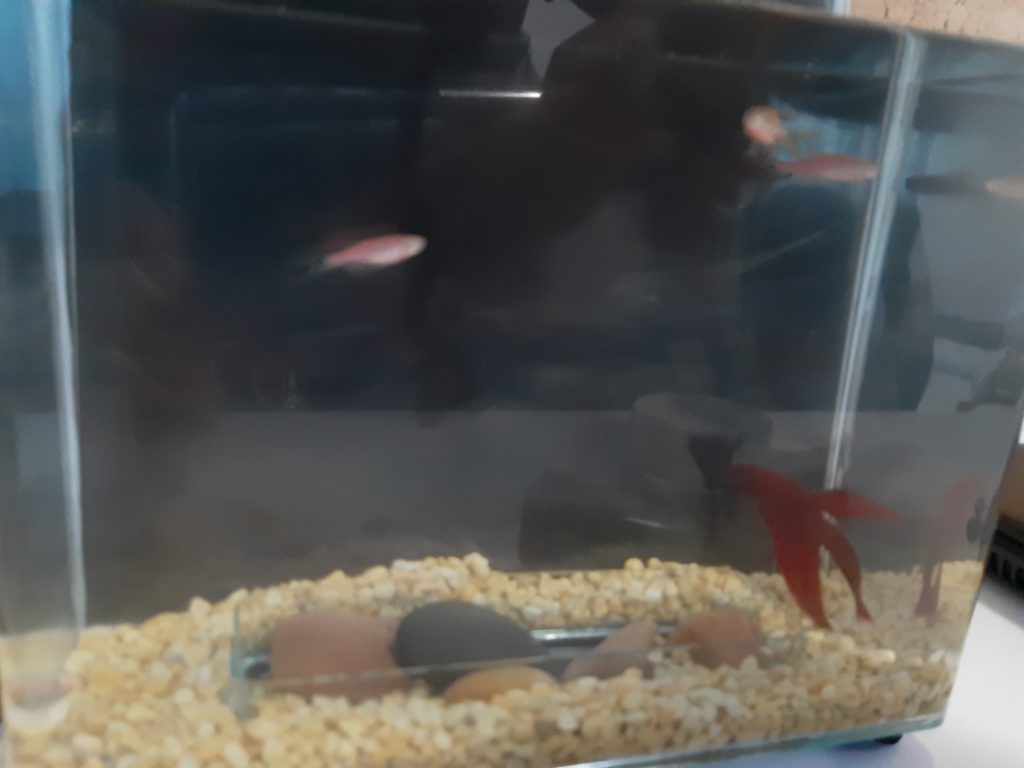
Actually, it’s more like four fish. Three danios and one Siamese fighter. This one was a beauty, all red and full of vigour.

The guy at the fish shop said that a three gallon tank would be fine for these fishies. No need for a heater, or filter. The fish would survive without these accoutrements.

This happened in March of this year. And it happened on a whim.

How do you visit a nursery, and not buy a fish though?

The fish shop had a variety of tanks and boasted lovely little “desktop” vessels, perfect for the beginner fish owner.

Meet the Danios: Benedict, Humphrey, and Larry, and the Siamese Fighter, The General

I was drawn in by the ease and simplicity of having a fish in my room. They don’t mess up your room, they’re low maintenance, and any idiot can feed a fish.

But two days into having these little pets, and the Siamese fighter, which I named the General, was starting to lose his spunk. Not as aggressive, staying at the bottom of the tank, and only coming up for food.

I was worried.

I Googled. And landed on a forum. What a load of pedantic weirdos who failed to offer a noob like myself, any help.

I chalked the General’s behaviour down to finally being at ease in the tank, while the danios darted about their home with lightning abandon.

My father suggested I put them in a big vase that we had carrying dust. How nice. It was bigger, and they seemed to love the new environment, but not the General. He became more and more lethargic.

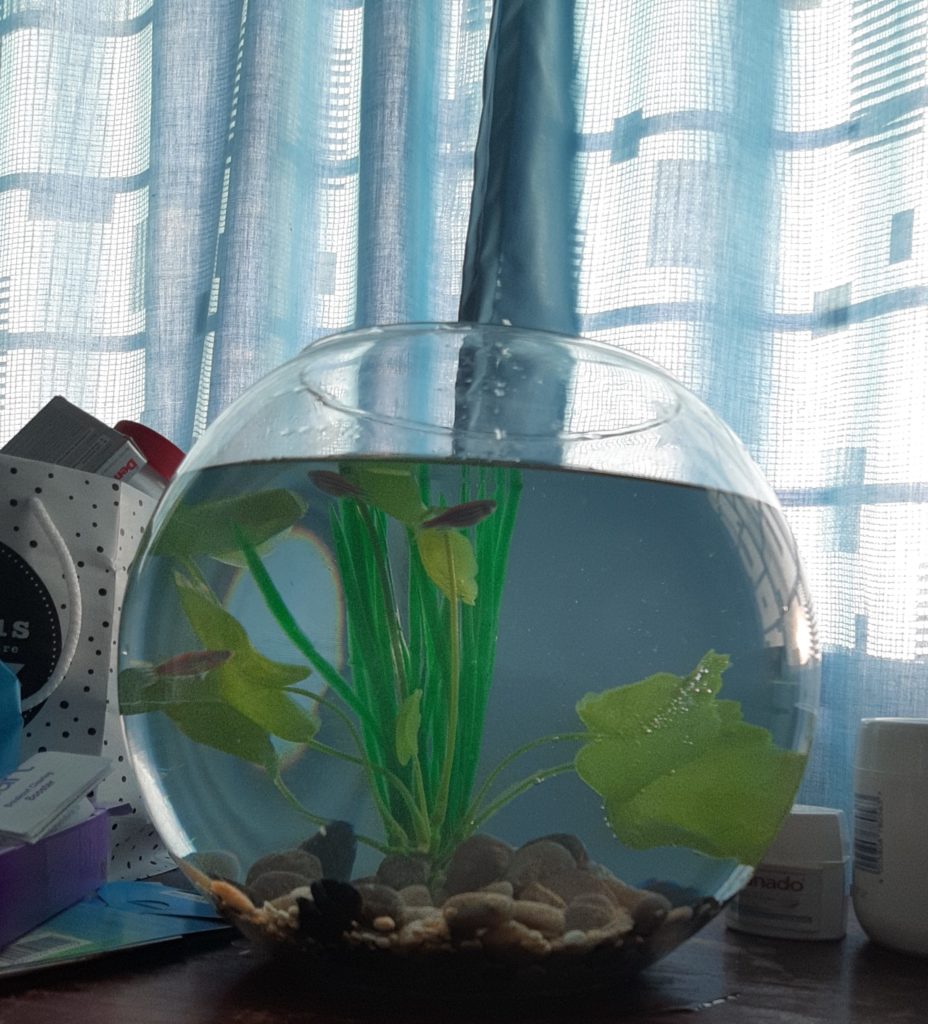
The glass bowl

Some more Googling and I realised that the water may just be too cold for my firey friend. But before I could buy the tank heater, it swam it’s last swim. The General was no more.

The funeral was brief, but dignified.

I thought this would be the last of my fishy troubles. But more awaited.

After washing the vase / fish bowl (and killing all the good media in the process) I marvelled at the beauty of the scene I had created for my remaining fish.

But then I heard a crack. Since I couldn’t see anything wrong, I carried on with whatever else had occupied my mind.

But then, another crack. And I checked again. Now there was some water on the table surrounding the bowl.

I sprang into action. I put some of the water from the bowl, into their first home, and quickly fished them out and placed the danios into the small, desktop tank.

After dealing with the cracked bowl, I gave in, and visited the pet shop near where I work.

There I managed to get a bigger tank, and filter, heater, thermometer, and some rocks for a fraction of the cost of the measly little desktop tank.

I did my research on cycling a tank. And after two weeks, the danios were able to move into their new home.

I haven’t looked back.

It’s amazing what experience and the correct equipment can do for a hobbiest.

Now to find the proper tank decorations…

The Problem with Documenting

The short answer: it takes too bloody long.

The long answer: settle down children, as I tell you a tale of woe.

I’ve just returned from an enriching and eye-opening trip to Morocco and Spain. The cultures, the textures, the tastes and the smells, the people; all diverse, yet somehow familiar.

Travel is important. It helps you understand yourself, your world, and its rather fun.

via GIPHY

But when embarking on an epic journey, one is often tasked with documenting the experience. To dedicate several blog posts to the experience, to post all your amazing pictures with fitting and insightful captions.

I have done neither of these things. Instead, I annoyed people on WhatsApp by posting so many pictures to my status, that the ticker resembled a solid line. There were often duplicates. The posts were so rushed that I failed to caption and explain their significance.

However, I did not heed any of the complaints; I had every intention of posting the pictures to social media, I would dedicate several blog posts to the experience.

Its three months later, and nothing.

Not a picture, not a sentence, not a #ThrowbackThursday, #FlashbackFriday.

It’s just such a pain.

I have to collect and collate all our pictures (there were three of us).

I would have to compile and caption so that they would make sense, and do justice to the journey.

And so, even as I write this long-winded whinge about being privileged enough to travel but being afraid to take on the task of documenting the experience, I don’t have the compulsion to even start.

How do travel bloggers do it?

*Asking on behalf of a lazy aspiring travel-blogger